Saturday, February 14, 2015


Tuesday, February 7, 2012
Derborence
J'ai remarqué en regardant le film Derborence de Francis Reusser (1984) que Charles-Ferdinand Ramuz a utilisé dans son roman éponyme publié en 1934 une complainte du XVème siècle, celle du Roi Renaud. (Apparemment, Gérard de Nerval aurait publié en 1854 des Chansons et Légendes du Valois [sic], et le Roi Renaud était de la partie...) Il existe de multiples versions de cette chanson, mais voici celle que je connais:
L'enregistrement "anthropologique" (une compilation de folklore français) que j'en avais devenait ensuite inaudible, donc j'ai terminé l'histoire par moi-même (un peu à l'arrache...):
Ces paroles étaient chantées par un vieux villageois sur un ton monotone et régulier, mais on en percevait d'autant plus intensément, par contraste, la variété des divers personnages et la complexité de leurs émotions. Comme ils sont explicitement nommés, la confusion est évitée.
La version la plus proche que j'ai pu trouver, la moins édulcorée est dûe à Cora Vaucaire.
Il y a un jeu d'écho à l'oeuvre dans ce texte. D'abord, j'ai toujours pensé que les bruits de charpenterie qu'entend la femme proviennent des clous du cercueil de son mari, mais plus haut c'est son lit qu'il recommande de construire en silence. Il se peut que ce soit en fait la même chose, le "lit" étant un euphémisme pour "lit mortuaire". Un autre dédoublement qui m'avait frappé est celle des nouveaux-nés: à la fois la femme de Renaud et la voisine viennent d'accoucher. Ca me paraissait indélicat de la part de la belle-mère d'inventer une histoire à laquelle la femme peut si bien s'identifier. Peut-être est-ce déjà une façon de lui faire sentir qu'elle est en vérité personnellement concernée par le drame qu'elle soupçonne... Une troisième résonance peut-être (en tirant un peu par les cheveux) pourrait mettre en relation l'étripage de Renaud et l'accouchement de sa femme.
Dans Derborence, Ramuz mélange un peu les cartes: après l'effondrement de falaise ("C'est les Diablerets qui sont venus en bas!") ce n'est pas la mort du mari que la mère tente de cacher, mais celle d'un voisin, et ce n'est pas des bruits de charpenterie qui inquiètent d'abord la femme, mais la cloche du village. Aussi, la femme est enceinte au lieu d'avoir accouché récemment. Les mensonges de la mère sur le petit de la voisine sont néanmoins bien identiques, tout comme l'incrédulité de la fille.
Quand Jean Renaud de guerre revint
Tenant ses tripes dans ses mains,
Sa mère à la fenêtre en haut
Dit voici v'nir mon preux Renaud.
Renaud, Renaud, réjouis-toi!
Ta femme est accouchée d'un roi.
Ni de ma femme, ni de mon fils,
mon coeur ne peut se réjouir.
Je sens la mort qui me transit,
Mère faites-moi dresser un lit.
Mais faites-le dresser si bas
Que l'accouchée n'entende pas.
Et quand ce fut vers la minuit
Jean Renaud a rendu l'esprit.
Mais dites-moi mère ma mie
Ce que j'entends clouer ainsi?
Ma fille c'est le charpentier
Qui raccommode l'escalier.
Mais dites-moi mère ma mie
Ce que j'entends pleurer ainsi?
C'est la voisine d'à côté
Qui a perdu son nouveau-né.
Mais dites-moi mère ma mie
Ce que j'entends chanter ainsi?
Ma fille c'est la procession
Qui fait le tour de nos maisons.
L'enregistrement "anthropologique" (une compilation de folklore français) que j'en avais devenait ensuite inaudible, donc j'ai terminé l'histoire par moi-même (un peu à l'arrache...):
Mais dites-moi mère ma mie
Qui donc ils s'en vont enterrer?
C'est Jean Renaud ton épousé
Qui a péri vers la minuit.
Ces paroles étaient chantées par un vieux villageois sur un ton monotone et régulier, mais on en percevait d'autant plus intensément, par contraste, la variété des divers personnages et la complexité de leurs émotions. Comme ils sont explicitement nommés, la confusion est évitée.
La version la plus proche que j'ai pu trouver, la moins édulcorée est dûe à Cora Vaucaire.
Il y a un jeu d'écho à l'oeuvre dans ce texte. D'abord, j'ai toujours pensé que les bruits de charpenterie qu'entend la femme proviennent des clous du cercueil de son mari, mais plus haut c'est son lit qu'il recommande de construire en silence. Il se peut que ce soit en fait la même chose, le "lit" étant un euphémisme pour "lit mortuaire". Un autre dédoublement qui m'avait frappé est celle des nouveaux-nés: à la fois la femme de Renaud et la voisine viennent d'accoucher. Ca me paraissait indélicat de la part de la belle-mère d'inventer une histoire à laquelle la femme peut si bien s'identifier. Peut-être est-ce déjà une façon de lui faire sentir qu'elle est en vérité personnellement concernée par le drame qu'elle soupçonne... Une troisième résonance peut-être (en tirant un peu par les cheveux) pourrait mettre en relation l'étripage de Renaud et l'accouchement de sa femme.
Dans Derborence, Ramuz mélange un peu les cartes: après l'effondrement de falaise ("C'est les Diablerets qui sont venus en bas!") ce n'est pas la mort du mari que la mère tente de cacher, mais celle d'un voisin, et ce n'est pas des bruits de charpenterie qui inquiètent d'abord la femme, mais la cloche du village. Aussi, la femme est enceinte au lieu d'avoir accouché récemment. Les mensonges de la mère sur le petit de la voisine sont néanmoins bien identiques, tout comme l'incrédulité de la fille.
Tuesday, October 11, 2011
Melancholia
Si on définit la mélancolie comme une inaptitude au bonheur, on peut imaginer reconstruire grossièrement le processus qu'a suivi Lars von Trier pour écrire le scénario de son dernier film Melancholia. Il lui fallait d'abord poser comme cadre un événement qui se prête pleinement au bonheur -- un mariage fastueux, un avenir professionnel radieux, etc. -- pour mieux faire ressortir le caractère (apparemment) abbérant des sentiments d'abatement de la mariée Justine (Kirsten Dunst, prix d'interprétation féminine à Cannes, même si c'est plutôt Charlotte Gainsbourg qu'on regarde.. mais bon elle l'avait déjà pécho en 2009 pour sa prestation dans Antichrist). Sa froideur et son détachement incompréhensibles finissent par faire capoter le mariage et partir le marié.

La deuxième partie du film décrit les quelques jours précédant la collision d'une planète nommée Melancholia qui se cachait jusque-là derrière le Soleil. J'y vois une variation sur le même thème d'un bonheur à portée de main (une jolie famille dans une belle propriété, un événement astronomique unique et excitant à observer, etc.) qui périclite malgré tout. La destruction de la vie sur Terre (et donc partout selon Justine) qui s'ensuit est l'image amplifiée de la séparation des mariés qui les prive de leur chance de progéniture. C'est donc la même histoire qui est racontée de deux manières différentes: la première fois à un niveau personnel, famillial, et la seconde à un niveau cosmologique. Une telle projection de motifs psychologiques sur des éléments naturels me fait penser à la manière dont les alchimistes projetaient leurs conflits internes sur les métaux. Jung disait que l'alchimie constituait le revers de la médaille du christianisme en ce sens qu'alors que les chrétiens se considéraient comme pécheurs originels et cherchaient à se sauver par la foi, les alchimistes considéraient que c'était la matière physique qui était corrompue et voulaient la purifier en transformant par exemple le plomb en or (philosophique).
Peut-être Lars a-t-il été influencé par la lecture de Saturne et la Mélancolie de Panofsky et Saxl?


La deuxième partie du film décrit les quelques jours précédant la collision d'une planète nommée Melancholia qui se cachait jusque-là derrière le Soleil. J'y vois une variation sur le même thème d'un bonheur à portée de main (une jolie famille dans une belle propriété, un événement astronomique unique et excitant à observer, etc.) qui périclite malgré tout. La destruction de la vie sur Terre (et donc partout selon Justine) qui s'ensuit est l'image amplifiée de la séparation des mariés qui les prive de leur chance de progéniture. C'est donc la même histoire qui est racontée de deux manières différentes: la première fois à un niveau personnel, famillial, et la seconde à un niveau cosmologique. Une telle projection de motifs psychologiques sur des éléments naturels me fait penser à la manière dont les alchimistes projetaient leurs conflits internes sur les métaux. Jung disait que l'alchimie constituait le revers de la médaille du christianisme en ce sens qu'alors que les chrétiens se considéraient comme pécheurs originels et cherchaient à se sauver par la foi, les alchimistes considéraient que c'était la matière physique qui était corrompue et voulaient la purifier en transformant par exemple le plomb en or (philosophique).
Peut-être Lars a-t-il été influencé par la lecture de Saturne et la Mélancolie de Panofsky et Saxl?

Saturday, September 17, 2011
WoW for science
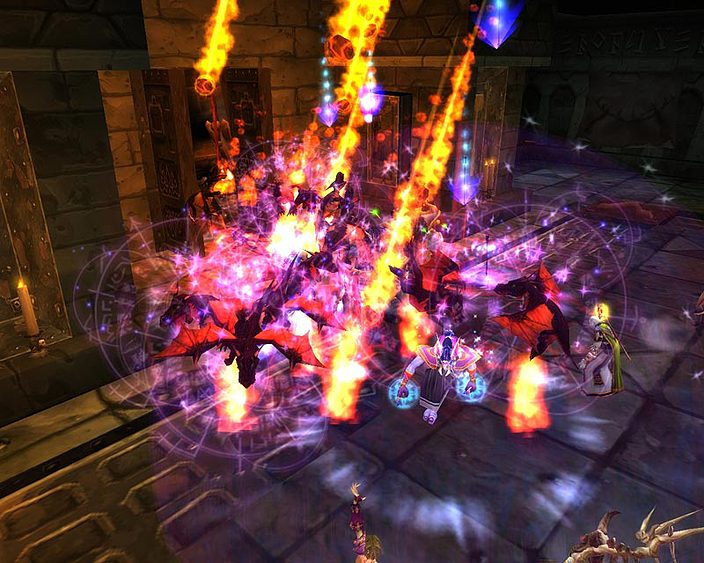
I found this talk by Jane McGonigal on the benefits of gaming quite inspiring (see also a more recent one). She makes a convincing point that after having spent about 10,000 hours playing online games during their youth (almost as much as they spend in school) gamers have acquired mad skillz and it would be nice to see this potential realize itself in the real world. She refers to the game "World of Warcraft" (WoW) as the "ideal collaborative problem-solving environment" (4:30) and I immediately thought this kind of platform should be used for scientific research. This would basically turn research into video game. Note that this isn't a very long stretch since the feeling of research can be as exciting as that of video game.
I have to say though that I don't know the first thing about WoW, except that you have to "pwn the noobs" and become a "leet king" (1337). Apparently, you are being assigned a mission matching the abilities of your avatar (orcs, trolls, dwarfs, paladin, etc.), and you collaborate with hundreds of other players to achieve an "epic win". You get frequent feedback on your performance and your level increases.
Now imagine that instead of having to kill a dragon or whatever, the players are given actual unsolved scientific problems. Pretty cool, hu?
In fact, similar platforms already exists, most notably Tim Gowers' Polymath project, and it's also interesting to recall that in their early days the internet and the world wide web were inextricably linked to scientific research. The arXiv is a brilliant example. This all comes together in Michael Nielsen's promotion of open science. [Btw, all those TeD talks are so insufferably optimistic and well-intentioned!]
Maybe another site worth mentioning would be the Open Problem Garden.
That's more like a collection of hyperlinks than a proper reflection, but I'll leave it at that for now.

Monday, January 17, 2011
Uncle Boonmee Who Can Recall His Past Lives

The 2010 Palme d'Or finally arrived in Oxford. It was at the Ultimate Picture Palace, I was sitting on the very first row, and I had the time of my life. It's a sublime jewel of supernatural enchantments, simple and sophisticated altogether, traditional and avant-garde. Well done Apichatpong Weerasethakul!
I just want to talk about one single shot, not because it is the most representative of the movie, but because it struck my imagination. It's a static shot of a room, facing a wall against which there is a bench on which two persons are sitting. They are watching a tv on a table against the left wall of the room. So they are not facing the tv but rather have a very oblique perspective on it. So much so that I wondered if they were actually able to see the screen. It seems completely unrealistic. A more conventional way to edit such a scene would have been to show the people frontally and then cut on a shot of the tv that they're watching (btw the last scene of the movie is of that type:(. Then I realized that it did not matter after all, since the scene makes perfect narrative sense as it is. It's clear that they're watching the tv, even though both their faces and the tv are visible simultaneously. This stylistic effect is somehow reminiscent of certain cubist paintings which show a face both in profile and frontally. But it goes even further: whereas the cubist portrait presents different perspectives on one object, Apichatpong's shot encompasses both the observers and what they observe at once. Some sort of primordial unity regained!

Friday, January 14, 2011
Googoo Gaga

I've been willing to write about Lady Gaga for a little while, but it was incompatible with postdoc application time so I postponed. Also, I wasn't too sure, to be honest, what I could possibly write about her that would not be too obviously dumb. My attention was brought to her by this video (not exactly the official vid -- careful). Check out this video rather, viewed more than 300m times (I remember a time where a million views was amazing..) [I'm not saying there's nothing lame about the video btw]. I liked the fact that some of the lyrics are in French, or at least in some sort of French. Quite glam I thought, for an American pop song. Also there's a purer rave sound than you'd expect, stuff that was underground in the 90s but that still does the job OK. Then I realized that Lady Gaga is closer to a performance artist than a pop star, and a rather interesting one moreover. My first suspicion of her significance was confirmed when I learned that the young US officer that smuggled the 240,000 diplomatic cables published by Wikileaks did so by burning them on a Lady Gaga CD! This mixture of art and political revelations might appear coincidental but I like to imagine, a bit in the spirit of Wreck & Salvage, that there is some deeper connections, whose roots dive into the current American Zeitgeist. Whatever.
Gaga's first words in Bad Romance are something like
Rha rha a ah ahaRoma rromama aGaga oh lala aWant your bad romance
[Just to mention, there are already two French elements in there: the rolled "r" and the "oh lala".]
And this is the kind of thing that will play in your head while you're cooking for instance. So at some point I asked myself but what is she saying for fuck's sake? There are words that I can recognize, specially the last bit, that's rather clear, and "Gaga" also makes an apparition, and there are bits that are clearly just sounds, like the "ohooho" of the introduction; but what I find puzzling is that there is also something that is between the two.
First, the "rha rha" are purely bestial (think MGM lion) and they degenerate, just like every line, to some simply musical sounds. Then comes the intriguing part: "Roma". This also appears as just a meaningless sound but it's far too close [sic] to the "romance" in the title of the song not to be related to it. Certainly it has to be some embryonic version of it. Something is taking shape here, from the bestiality of a prelinguistic realm towards some more advanced form of communication, namely language. Notice also that when the "roma" degenerates, one could hear "mama" [compare to "papa paparazzi"]. Just like what happens in the development of a child, the first thing that comes out of the undefined darkness is the figure of the mother. Then comes "Gaga", the ego. This also frequently a child's first sounds. And finally something resembling a sentence expressing a desire towards the other can be formulated.
So my verdict would be that this chorus illustrates the genetics of the artistic process, through which a raw emotion is sublimed into some creation that resort to a higher level language.
Now one could wonder if this emergence process was successfully performed in this case. After all, it all comes to wanting "your bad romance". Sounds more like a destructive drive to me. In addition, the ego/other or subject/object couple is not adequately articulated. Not only is the "I" still missing, but also it would seem more natural to want "our romance" instead of "yours". Similarly, later in the song one hears "And I want your revenge": what is that suppose to mean? Well, maybe this is intended as "I want my revenge on you". That would make more sense. Unless... Could the artist be skillfully using this me/you confusion to underline the fact that such a vicious spiral of projections and counter-projections often characterizes a "bad romance"? Stefani Germanotta: brava!

Sunday, September 5, 2010
Early thoughts
I have a rather clear memory of what might have been the first time I realised that I was capable of thinking. We were having a lunch with my family in the annex of our house, where we used to roast meat on Sundays. The conversation came to the subject of the existence of God, and whether it was possible to prove it or not. I said that I considered that such a proof was not even desirable since since according to Saint Paul's Apocalypse God would come back on Earth at the end of time if we managed by earthly considerations to prove that He's here, then that would be the end of time. My parents' and sister's reaction was that of surprise that such ideas could circulate in my head. This made me aware that a thought had been created within me that had not been introduced there from the outside.
\[ \infty - \infty = 0.\]
Some years (?) later I came across Saint Anselme of Canterbury's "ontological argument" for the existence of God. Roughly, it resorted to the reductio ad absurdum and said that given that the Perfect Being must have all positive qualities, if He didn't exist, He would lack one of those qualities, namely the quality of existing. I imagined a refutation of it, which went as follows. If the existence of God could be proven, then we humans would have no choice but to believe in Him -- in which case He would also lack a quality, the generosity of letting His creatures decide freely if they want to believe in Him or not.
Beyond the naive scholasticism of those early thoughts, something in their spirit is still very much akin to what turns me on nowadays.
Had I pushed my reflections a bit further, I would have realised that I was dealing with an absurd absurdity. By the same type of reasoning it has to be true that God does exist but it must also be impossible for us to prove it. How can this be? And then of course it's Godel's incompleteness theorem that comes to mind. (Godel who btw wrote down an ontological proof of his own using modal logic, which he kept secret until he thought his last days had arrived...)
PS: Those memories came back to me today while I was playing with the following thought:
"The meaning of life is to search for the meaning of life."I like it because of its circularity and because it's contradictory in the sense that it implies that were we to actually find the meaning of life it would be gone. In fact it's also contradictory in the sense that it undermines its own content: it gives you the meaning so why search for it? The entire substance of the sentence is sucked in by the word "search", which then operates just like a minus sign in an equation. One could for example symbolise it abstractly as
\[ \infty - \infty = 0.\]
I fancy writing it in repetitive style as well:
" The meaning of life
is to search for the meaning of life
is to search for the meaning of life
is to search for the meaning of life."
Just like that.
PPS: the etymology of the word "search" is agreeable since, along with chercher in French and cercare in Italian, it comes from the Latin word circus, the circle. :) Should we push the perversity yet another step further and replace it by the word "research"?
Subscribe to:
Posts (Atom)